One app instead of four.
Anyone doing this properly ends up with a stack. One app for food, another for lifting, a third for sleep and recovery, and something else again for the charts. Four subscriptions, four logins, and not one of them can see what the others know.
Putting it in one place saves money, which is the least interesting part. What it actually buys you is this: what you ate can change what you are asked to lift. No stack of apps can do that, because the app that knows what you ate is not the one writing your session.
The workout logger
This is the part built for people who actually train, rather than bolted on so the box could be ticked. Sets, reps, weight and RIR, logged as you go, with your previous numbers on the same screen so you know what you are trying to beat.
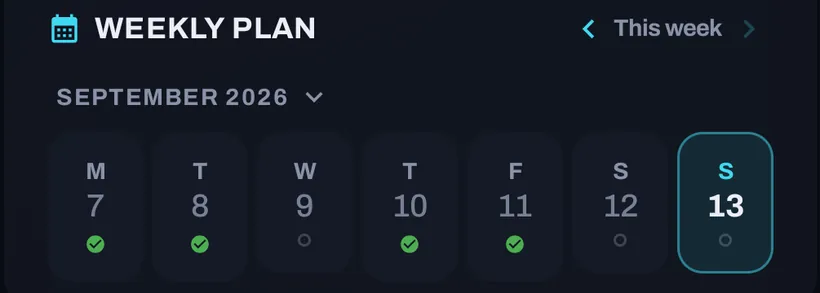
- Every built-in programme, plus a routine of your own, free
- Personal bests tracked as you go, rather than worked out afterwards
- A HIIT timer that keeps counting and beeping with the screen off, free, because a timer that needs the screen awake is a timer that dies mid-round
- Supersets, custom exercises, unlimited routines, exercise swaps, 1RM and DOTS Premium
The coach acts, it does not just comment
Most apps that call something a coach write you a sentence. This one reads your readiness, your recent training load, which muscles you have hit lately and whether you have been eating enough, then makes a call in that order and changes the sets in front of you if you have given it permission.
Two things about it are worth saying out loud, because they are the opposite of how this normally goes:
- It asks first. Explaining itself is on by default. Changing your session is off by default, and it cannot change anything without also telling you why
- It excludes, and it never un-excludes. Rule a movement out because something hurts and it stays out until you say otherwise. The app will never tell you that something has become safe again, because it is in no position to know
All of that is free. The only paid part is which of the three coaching tones it speaks in.
Readiness, sleep and steps
Readiness is free, and so is the sleep, heart rate and heart rate variability that feed it, read from Apple Health or Health Connect. Steps get their own read, against your own baseline rather than a round number someone picked, and stay quiet on days you logged a session.
The analysis Premium
Where the stack really falls down is the joins. Your lifting app cannot see your food, your food app cannot see your sleep, and neither of them can tell you which of the two is the reason this month went the way it did. Everything here is read together.
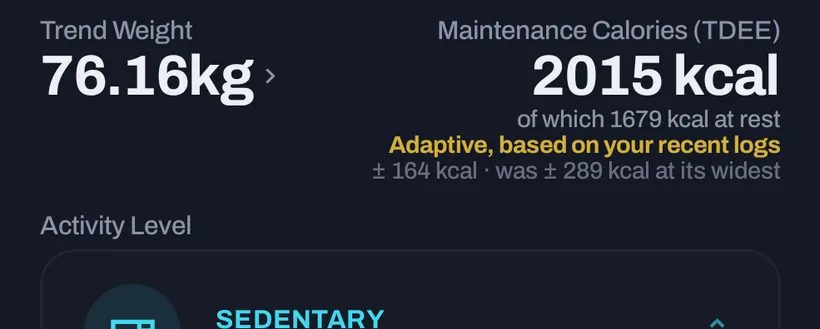
- Weekly check-ins that compare what you planned against what happened
- Body measurements, alongside weight rather than instead of it
- Micronutrient depth, with a blank left as a blank. An unreported nutrient is not a zero, and no other tracker is straight with you about that
- The full picture of what your burn rate has been doing, and how sure the app is about it
Your body, mapped
Every logged set lights up the muscles it actually worked, front and back, so the thing you have been quietly neglecting for two months is obvious in a second rather than buried in a spreadsheet.
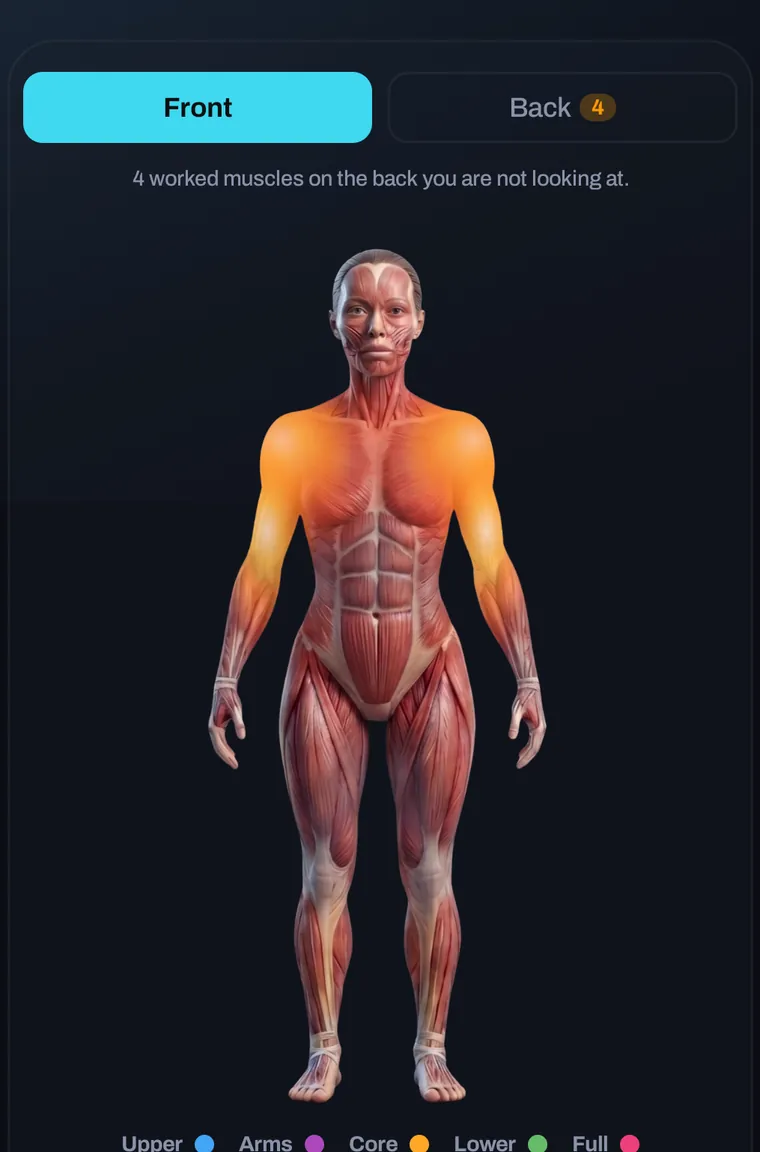
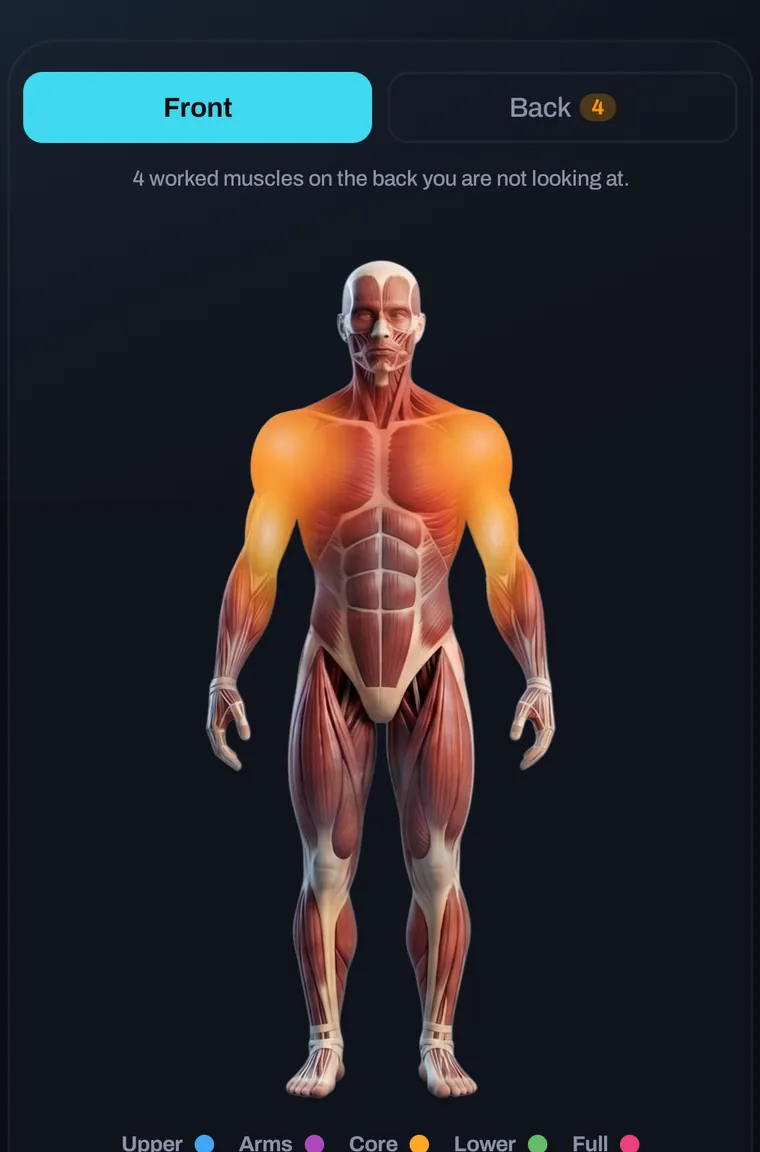
Two models, not one with a label swapped.
Built properly for women, not adapted for them
Female physiology is not a correction factor you apply to a man's, so the women's side was started again from the ground up rather than patched on at the end.
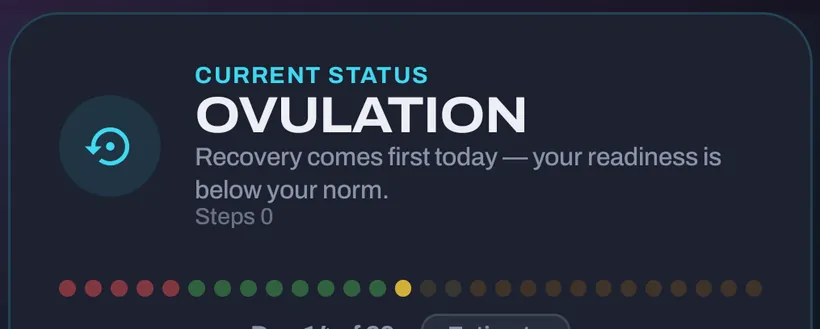
- Your cycle feeds the day, not a separate tab. Where you are in it changes what the app asks of you, including when to back off
- It expects the water that comes with it. Kriterion does not read that week's weight as fat, and does not cut your calories over it. Most trackers cannot tell the two apart at all, so they panic, and then you do
- It knows creatine holds water too, and treats that as the good sign it is rather than a fortnight of failure
- Cycle tracking is free, including the guidance that comes with it
I built the women’s side twice, and I have not found another tracker that handles either of those properly.Josh, founder
How the burn rate is measured covers what that does to the accuracy, and why it was the hardest part to get right.
The food side
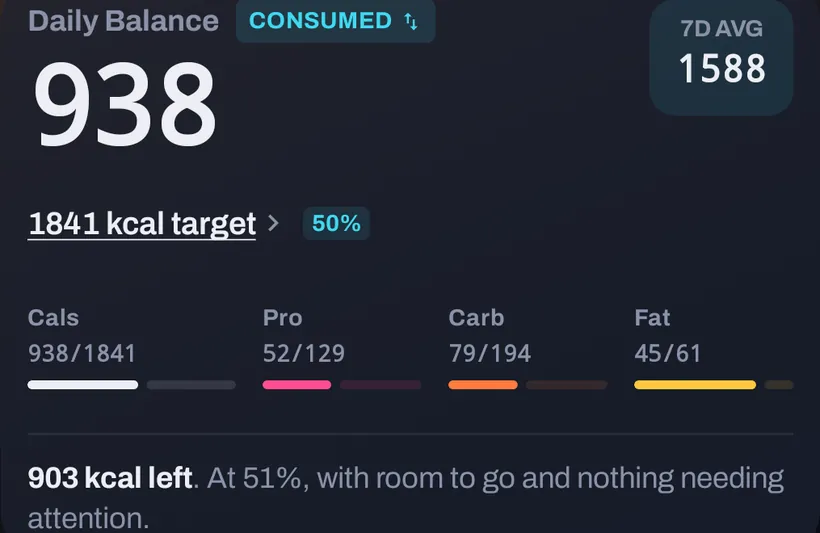
UK and Ireland first, restaurant menus included, and growing. Every macro plus sugar, salt, saturated fat and fibre on effectively everything. Reading a label with your camera happens on your phone rather than on a server, which is why it is unlimited and free. There is nothing to meter, because nothing is sent.
How long before it tells you anything
Nobody is any good at a job in their first week, and an app that hands you a confident number on day one is telling you about a textbook, not about you. Kriterion waits.
- A fortnight minimum before it will say anything about your burn rate
- Then either six weigh-in days and ten logged food days inside four weeks, or three weeks with eight days trained, whichever you get to first
- The range it gives you narrows as the weeks land and widens again if you stop, which is the honest behaviour rather than the flattering one
That is also how the free trial is earned rather than handed out: it arrives when there is enough of your data for the paid part to actually be worth something. What the first fortnight looks like.
What it costs
Free tells you what you ate. Premium tells you what you burn. The free tier is the app, used every day, permanently, with no advert, no account and no countdown. Here is the whole list, caps included.